Tag Archives: Russian literature

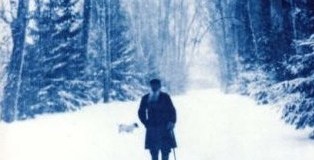
Russian books and stories, or Tolstoy in a winter landscape

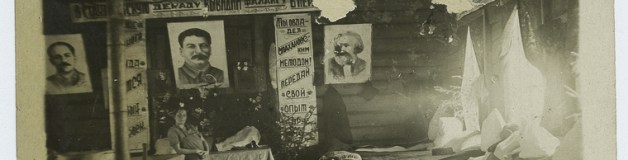
The 25th Moscow International Book Fair wrapped up today and if the scant English-language news coverage is any indication, either this particular event is somewhat backward looking or else the Iron Curtain has redescended across the Continent recently without my noticing. Here are some of the headlines relating to the fair: “Books by Fidel Castro […]
Continue Reading

Literary roundup: Russian women and Russian words

At Russia Beyond the Headlines there is an interview with Boris Pasternak’s nephew Nicolas Pasternak Slater talking about his translation of the correspondence between his family and his famous uncle as well as his current project of preparing a trilingual edition of his mother Lydia Pasternak’s poetry for publication (she wrote poetry in Russian, German […]

Continue Reading

St. Petersburg’s lost poet

Today marks what would have been the 72nd birthday of poet Joseph Brodsky. Two months after his death in January 1996, Czeslaw Milosz wrote in Index on Censorship of what was at stake in Brodsky’s poetry:  “In one of his essays Brodsky reflected that Mandelstam was a poet of culture. He too was a poet […]

Continue Reading

Literary roundup: Rossica Prize for best post-horses of enlightenment

Congratulations to John Elsworth for winning this year’s Rossica Translation Prize for his translation of Andrei Bely’s Petersburg. I don’t remember exactly how he put it but I remember Nabokov writing how untranslatable the novel is. Hopefully, this means he was wrong. The other shortlisted books all sound great – and include Vasily Grossman’s The […]

Continue Reading

Literary roundup: Jerusalem Festival and a publisher’s campaign

“The mist that came from the Mediterranean sea blotted out the city that Pilate so detested. The suspension bridges connecting the temple with the grim fortress of Antonia vanished, the murk descended from the sky and drowned the winged gods above the hippodrome, the crenellated Hasmonaean palace, the bazaars, the caravanserai, the alleyways, the pools […]

Continue Reading

Literary roundup: Russia’s sacred monsters

Big Russian novels are in the air as of late. At The Millions eight experts weigh in on George Steiner’s Tolstoy or Dostoevsky question. I read Steiner’s book a fairly long time ago and don’t remember him actually answering that question, which seems to be the standard reaction among the experts. Actually, I think the […]

Continue Reading

Politics and today’s gutless novelists

Are English and American writers missing an opportunity to write political novels? And Jo Nesbø talking about the ethics of a fictional treatment of last year’s mass killing in Norway. Last week was rough for novelists. First their ability to write philosophical novels was questioned, now they are being taken to task for their inability […]

Continue Reading

Literary roundup: Poets of our mad, transitory world

“To your mad world—one answer: I refuse.” – from new translations by Ilya Kaminsky and Jean Valentine of Marina Tsvetaeva’s “Poems to Czechoslovakia.” The latest issue of Poetry magazine features a number of selections of the work of Russian poet Marina Tsvetaeva. I will soon be writing something about Tsvetaeva’s brief but impactful time living […]

Continue Reading

Literary roundup: Eugene Onegin by way of Krzhizhanovsky, and Russian novelists of the moment

Sigizmund Krzhizhanovsky has been receiving a lot of critical attention lately due to the NYRB’s publication of his novel The Letter-Killers Club (most recently today in the latest Quarterly Conversation) but it was another of his unpublished, unseen works that recently saw the light at Princeton University. For the 1937 centennial of Alexander Pushkin’s death, […]

Continue Reading

Practical application of Russian literature

Yesterday I posted about an article defining the influence of Tolstoy’s novella The Death of Ivan Ilych on the psychological and medical approach to death. It turns out that the usefulness of Russian literature goes beyond the medical profession, as Thomas de Waal points out in an excellent article in Foreign Policy. With a tip […]

Continue Reading