Author Archives | literalab

Literary roundup: Tsvetaeva and fighting for writing in translation

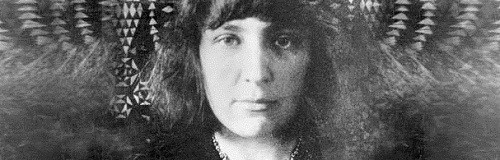
On February 20 Prague literary journal B O D Y is hosting an evening of the work of Russian poet Marina Tsvetaeva by translator Mary Jane White. The translations will be accompanied by excerpts from the Russian originals and a scholarly talk about “the soundscape of Kafka’s and Tsvetaeva’s writing. “The evening kicks off with […]

Continue Reading

Asymptote and the cause of international writing

In a world where overhyped English-language books playing on a predictable single-note formula (take your pick – 1. Quirky, 2. Topical, 3. Autobiographical) all too often overshadow masterpieces by writers from the wider world, it’s clear that international literature needs its champions. And champions it has, though not that many, and maybe not any who […]

Continue Reading

Literary roundup: Marxism de Sade and Valentine’s Day Zweig

Boris Akunin’s Sebald Lecture delivered in London on February 4, is now available online. He talks about motherly manipulation, being tramautized by Steinbeck – i.e. everything you’d expect a lecture on translation to be about. But he also talks about the specific place of translation in the Soviet Union and how it was “cleaner” than […]

Continue Reading

Jerusalem International Book Fair

The Jerusalem International Book Fair runs from February 10 to 15 and as always there are a lot of writers and events in literalab’s sphere of interest. At the literary cafes these include Hungarian writer and previous Angelus award winner (link) György Spiró, who will be speaking about his autobiographical novel Dreaming For You. Polish […]

Continue Reading

Literary roundup: Karski animated and short stories in translation

The clock is ticking on the Kickstarter deadline for a project to make a partially animated documentary film about Jan Karski, the Polish resistance hero who tried to bring the Holocaust to light at a time when many people found the reports they were hearing too hard to believe. It’s called Karski & The Lords […]

Continue Reading

Literary roundup: examining evil and Russian books 2013

Prague literary journal B O D Y has an unbelievable story from award-winning Czech writer Tomáš Zmeškal. “Vision of Hitler,” translated by Nathan Fields, is a story that is even more unnerving in keeping the reader guessing what kind of story it is than in its ultimate subject matter (though that’s unnerving too). What begins […]

Continue Reading

Literary roundup: Akunin in London and reading to the void

On February 4 in London, Russian novelist Boris Akunin will deliver the annual Sebald lecture titled “Paradise Lost: Confessions of an Apostate Translator.” Akunin, a pen name for Grigory Shalvovich Chkhartishvili, is known primarily for his historical mystery series such as the The Adventures of Erast Fandorin, but before becoming a famous writer was an […]

Continue Reading

Literary roundup: Man Booker International and Amerika’s last page

The shortlist for the biennial Man Booker International Prize has been announced and it’s notably less Anglocentric than previous years with only three of the 10 listed authors writing in English, and one of those was born and raised to the age of 20 in the former Yugoslavia, that being Josip Novakovich (Canada). The other […]

Continue Reading

The Laboratory: Reading the Eastern Bloc

When I went to see Jiří Hájíček talk about his novel Rustic Baroque (Selský baroko) at Prague’s American Center in mid-January he made an obvious but still very interesting point about what distinguishes the English-language translation of the book from the other translations that have come out so far. He said that not only for […]

Continue Reading

Literary roundup: Sándor Márai isn’t hungry and fraught relations

At Project Forum’s Salon German writer Michael Krüger has a fascinating account of the numerous bonds that exist between Hungary’s great contemporary writers and Germany, of how virtually all of them speak excellent German (while, in my experience, many speak little or no English at all), and are extremely well-read in German literature. These connections, […]

Continue Reading