Author Archives | literalab

Technology of the night: ‘Kino’ by Jürgen Fauth

When Wilhemina Koblitz, called Mina, comes home after visiting her new husband in a New York hospital, the decadence of Weimar Berlin and the magical possibilities of cinema are likely distant from her preoccupations. The delivery of a pair of metal film canisters changes all that though, to the point that she plunges into a […]

Continue Reading

Literary roundup: European Disneyland and Russian literature lessons

In Eurozine, Slavenka Drakulić has a far-reaching exploration of European identity by looking at two very different forms of change taking place in Italy. On the one hand, there is the influx of refugee immigrants coming to the island of Lampedusa and the southern coastal city of Bari. It is a story of incredible privations […]

Continue Reading

Literary Broccoli: Why Cliches about Translations Hurt Books

Translations shouldn’t be treated as “literary broccoli” or “armchair travel” and doing so is counterproductive. An article on some of the longstanding myths attached to literature in translation. Read the full article at Publishing Perspectives Photo – Ryūkō eigo zukushi (fashionable melange of English words), woodcut by Tsunajima Kamekichi showing illustrated sampler of foreign everyday […]

Continue Reading

Literary roundup: Poets of our mad, transitory world

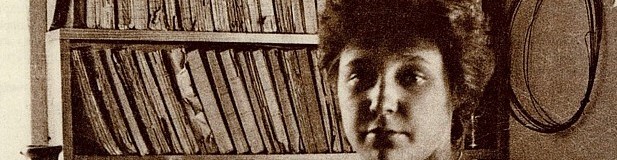
“To your mad world—one answer: I refuse.” – from new translations by Ilya Kaminsky and Jean Valentine of Marina Tsvetaeva’s “Poems to Czechoslovakia.” The latest issue of Poetry magazine features a number of selections of the work of Russian poet Marina Tsvetaeva. I will soon be writing something about Tsvetaeva’s brief but impactful time living […]

Continue Reading

Czech writers being (re)discovered

The varied world of Czech literature, past and present, contains a vast store of work virtually unknown outside of the Czech Republic Nothing lasts forever, and the recent losses of Václav Havel and Josef Škvorecký emphasize the finitude of what was probably the greatest generation of Czech writers. Fortunately, there are numerous younger writers whose […]

Continue Reading

Finishing books

Tim Parks has an interesting and provocative blog post at NYRB on whether or not it’s necessary to finish good books. It’s obvious, of course, that he is going to suggest that leaving books unfinished is okay, otherwise he would never have written the piece in the first place (“And to conclude, I declare it […]

Continue Reading

Literary roundup: Schulz, suffering and soccer in Europe’s borderlands

This year not only will Poland and Ukraine co-host the UEFA European Football Championship, they will also collectively celebrate the 120th anniversary of the birth of Bruno Schulz. This isn’t just a friendly gesture – both countries have some claim on the brilliant writer as his Galician hometown of Drohobycz is in today’s Ukraine and […]

Continue Reading

Literary roundup: Counting statues and parallel lives

The Budapest Times has an article comparing the number of statues erected to notable figures with the idea that it will reveal something of “the intellectual and spiritual state of a nation.” Looking at the number of statues of writers put up since 1989 offers an interesting contrast: Albert Wass (writer): 49 Sándor Márai (writer): […]

Continue Reading

The Hitman’s Guide to Housecleaning

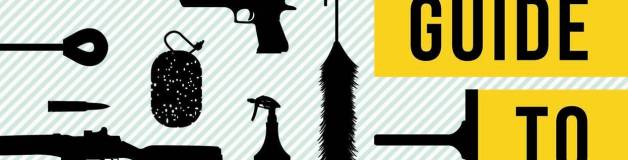
By Hallgrimur Helgason “Icelandic names are like Scud missiles. Their trail lingers in the air long after they’ve reached their target. Still these guys have my respect. Being a crime writer in the land of no murders can’t be easy. It seems you need the creative powers of a genius just to be able to […]

Continue Reading

Literary roundup: Eugene Onegin by way of Krzhizhanovsky, and Russian novelists of the moment

Sigizmund Krzhizhanovsky has been receiving a lot of critical attention lately due to the NYRB’s publication of his novel The Letter-Killers Club (most recently today in the latest Quarterly Conversation) but it was another of his unpublished, unseen works that recently saw the light at Princeton University. For the 1937 centennial of Alexander Pushkin’s death, […]

Continue Reading