Archive | March, 2012

Final Cut: An Interview With Jürgen Fauth

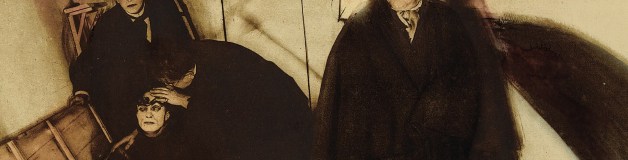
The mystery at the heart of Jürgen Fauth’s debut novel Kino extends from the smoke-filled cabarets of Weimar Berlin and the era’s legendary silent films to a Brooklyn apartment of two newlyweds and a decrepit drug-filled house in the Hollywood Hills. The transatlantic story comes from a German-born American writer who tells Readux about the […]
Continue Reading

Literary roundup: new award and age-old problems

The newly established Czech Book Award (Cena Česká kniha) has announced its shortlist of 20 titles out of 109 titles submitted by Czech publishers. A list of seven finalists will come out in April and the winner will be announced as part of Book World Prague on May 19. Shortlisted authors that can be read […]

Continue Reading

When Russian literature passed through Prague

Prague in the ‘20s was a hotbed of émigré Russian intellectual life In the wake of the Russian Revolution and civil war Prague played a surprisingly large and often unacknowledged role in 20th century Russian literature and thought. While the exiled aristocratic and political exiles settled in Paris and most of Russia’s intelligentsia chose Berlin, […]

Continue Reading

Read translated fiction or risk evisceration

An article on Aleksandar Hemon and Nicole Krauss presenting Dalkey’s Best European Fiction 2012, on the good old translation conundrum, on old men no longer reading fiction (from a very good source) and another kind of cut in the publishing industry besides job cuts. Read the full article at Czech Position

Continue Reading

Literary roundup: Dostoevsky’s warning from the other world and the Usedom Prize

The latest issue of the University of California at San Diego’s literature in translation magazine Alchemy includes Slovak actor/singer/writer Július Satinský’s Dostoevsky’s Letter translated by Magdalena Mullek. If you haven’t already been tempted to read it then a look at the story’s byline should more than convince you: “A letter from Fyodor Mikhailovich, of Great […]

Continue Reading

Letters from a distant Prague

Helen Epstein was not even a year old in the summer of 1948 when her father decided to take his family away from Czechoslovakia for a new life in the US. Having survived the Nazi concentration camps, he was unwilling to endure life under communism. Growing up in New York’s Czech émigré community, Epstein retained […]

Continue Reading

Literary roundup: the double affirmative in Russian and Romanian, Czech writers here and there

“There is one kind of literature which never reaches the voracious masses. The work of creative writers, written out of the author’s real necessity, and for his own benefit. The awareness of a supreme egoism, wherein laws become significant. * Every page should explode, either because of its profound gravity, or its vortex, vertigo, newness, […]

Continue Reading

Technology of the night: ‘Kino’ by Jürgen Fauth

When Wilhemina Koblitz, called Mina, comes home after visiting her new husband in a New York hospital, the decadence of Weimar Berlin and the magical possibilities of cinema are likely distant from her preoccupations. The delivery of a pair of metal film canisters changes all that though, to the point that she plunges into a […]

Continue Reading

Literary roundup: European Disneyland and Russian literature lessons

In Eurozine, Slavenka Drakulić has a far-reaching exploration of European identity by looking at two very different forms of change taking place in Italy. On the one hand, there is the influx of refugee immigrants coming to the island of Lampedusa and the southern coastal city of Bari. It is a story of incredible privations […]

Continue Reading

Literary Broccoli: Why Cliches about Translations Hurt Books

Translations shouldn’t be treated as “literary broccoli” or “armchair travel” and doing so is counterproductive. An article on some of the longstanding myths attached to literature in translation. Read the full article at Publishing Perspectives Photo – Ryūkō eigo zukushi (fashionable melange of English words), woodcut by Tsunajima Kamekichi showing illustrated sampler of foreign everyday […]

Continue Reading